1900
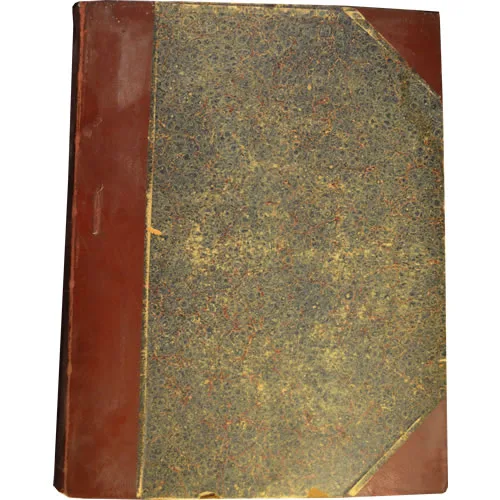
Publisher: Times Newspapers
Format: Hardback
ISBN: none
Poor condition set of four.
Events 1900
3 January — Royal Yacht Victoria and Albert almost capsizes while being floated out of dry dock at Pembroke Dock on completion of her construction.
9 January — Influenza outbreak in London.
24 January — Second Boer War: Boers repel British troops under General Sir Redvers Buller at the Battle of Spion Kop.
31 January — The Gramophone Company copyrights the His Master’s Voice illustration.
5 February — The UK and the United States sign a treaty for the building of a Central American shipping canal through Nicaragua.
6 February — The House of Commons vote of censure over the government’s handling of the Second Boer War is defeated by a majority of 213.
8 February — Second Boer War: British troops are defeated by Boers at Ladysmith, South Africa.
12 February — Meeting held at Mile End to protest against the Boer War ends in uproar.
14 February — Second Boer War: In South Africa, 20,000 British troops invade the Orange Free State.
27 February - Boer War: In South Africa, British military leaders receive an unconditional notice of surrender from Boer General Piet Cronjé.
27 February - Creation of the Labour party; Ramsay MacDonald is appointed its first secretary.
28 February — Second Boer War: The 118-day Siege of Ladysmith is lifted.
March–September — War of the Golden Stool fought against the Ashanti Empire.
1 April — Irish Guards formed by Queen Victoria.
4 April — An anarchist shoots at The Prince of Wales during his visit to Belgium for the birthday celebrations of the King of Belgium.
4 April — Queen Victoria arrives in Dublin on a rare visit.
24 April — The Daily Express newspaper published for the first time.
14 May–28 October — Great Britain and Ireland compete at the Olympics in Paris and win 15 gold, 6 silver and 9 bronze medals.
17 May — Second Boer War: Siege of Mafeking ends.
18 May — The UK proclaims a protectorate over Tonga.
5 June — Boer War: British soldiers take Pretoria, South Africa.
19–21 July — Bernard Bosanquet first bowls a googly in first-class cricket, playing for Middlesex against Leicestershire at Lord’s.
30 July - The Duke of Albany becomes Duke of Saxe-Coburg and Gotha as Carl Eduard following the death of his uncle, Duke Alfred, a son of Queen Victoria who is the third of the reigning monarch’s children to die.
30 July - Mines (Prohibition of Child Labour Underground) Act prohibits children under the age of thirteen from working in mines.
8 August — Great Britain loses to the United States in the first Davis Cup tennis competition.
14 August — An international contingent of troops, under British command, invades Peking and frees the Europeans taken hostage.
27 August — British defeat Boer commandos at Bergendal.
3 September — West Bromwich Albion F.C. move into The Hawthorns, a new stadium on the border of West Bromwich and Handsworth.
3 October — Edward Elgar’s oratorio The Dream of Gerontius receives its first performance in Birmingham Town Hall.
25 October — Second Boer War: United Kingdom annexes Transvaal.
22–14 November 1903 — Strike of Welsh slate workers at Penrhyn Quarry.
3 December — The Conservative Party under Lord Salisbury wins the ’Khaki’ general election. Winston Churchill is elected Member of Parliament for Oldham; and two Labour candidates are successful: Keir Hardie in Merthyr Tydfil and Richard Bell in Derby.
28 December — The Liverpool barque Primrose Hill is wrecked on South Stack off Holyhead, with the loss of 33 lives.
31 December — A storm causes a stone and a lintel to fall at Stonehenge; they are restored in 1958.
Keep browsing: See more Times Newspapers books Other books by Times Newspapers