


National Geographic 2001 January
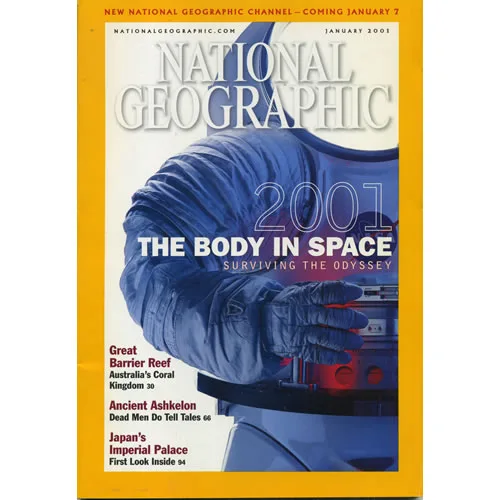
Publisher: National Geographic
ISBN: none
Ah, the illustrious January 2001 issue of National Geographic, a veritable time capsule of yesteryears, when flip phones were still a thing and the internet had yet to completely decide that it was done with social niceties. Within these well-thumbed pages lies a glimpse into a world where the biggest fear was Y2K and the most pressing question was whether we could still find a proper payphone. If only this issue could speak, it would regale you with tales of the past, but alas, it has only the wisdom of 22 years trapped between its cover—like a bottle of wine that’s been corked for a tad too long, waiting for the right moment to be uncorked, or at least, recycled into a paper mache project.
With the esteemed National Geographic logo emblazoned on the cover, you might expect a visual feast, perhaps a grand odyssey to the remote corners of our planet. Instead, you’ll find a delightful hodgepodge of articles that may or may not include deep-sea creatures that look like they’ve been designed by someone with a penchant for bad dreams, or perhaps the latest developments in the field of botany that are more interesting than they sound—if you squint hard enough and ignore the nagging feeling that you’ve seen it all before in a documentary narrated by an overly earnest David Attenborough.
Inside, you might stumble upon a feature on an endangered species that nobody seems to remember existed, covered with such enthusiasm you could almost hear the editors cheering in a dimly lit office somewhere, high-fiving each other over the glory of their commitment to conservation. Or perhaps you’ll find a tribute to some obscure place that’s seen more tourists in the past decade than its population, posing the existential question: “Why do we travel to find ourselves, only to post about it on social media?” Little did we know, the irony was just beginning.
But don’t be fooled by the slightly worn cover and the occasional coffee ring—this issue is a treasure trove of information that can spark conversations at the most boring of dinner parties. Need to impress your friends with trivia about the migration patterns of birds that were last seen flying in a cartoon? Look no further. Want to know why the Arctic ice caps are melting faster than your enthusiasm for January? You might find a few answers nestled somewhere between the ads for travel insurance and the majestic photographs of landscapes that seem to have forgotten how to be picturesque.
As you turn the pages, you might also encounter reprints of maps that would surely confuse modern-day GPS systems, reminding us that there was once a time we navigated by paper and sheer willpower. Remember the thrill of flipping the map upside down because, of course, north should be at the bottom sometimes? Ah, those were the days before we let our phones guide us down the most inefficient routes possible.
Condition: Used, bearing the marks of many a curious explorer’s fingertips. It’s been passed around like a hot potato at a family reunion, its spine cracked but not broken, and its pages maintaining a delightful aroma of old paper and nostalgia—sure to evoke a sense of longing for simpler times, or at least a longing for a complete collection of National Geographic back issues. This book has clearly seen some action, perhaps during a long-forgotten winter night when the television was out of service, or an ill-advised camping trip where someone thought it would be a good idea to read aloud at the campfire.
In conclusion, this January 2001 edition of National Geographic is not just a book; it is a relic, a memory, an artifact that will hold the essence of two decades past. So, if you’re feeling particularly nostalgic or just need a conversation starter that is sure to evoke bafflement, grab a copy. And remember, this beautiful piece of literature is available at Crappy Old Books, where the vintage never goes out of style, even if your understanding of geography does.
Keep browsing: See more National Geographic books Other books by National Geographic
