AI-assisted note, based on the text and a physical inspection of this copy.
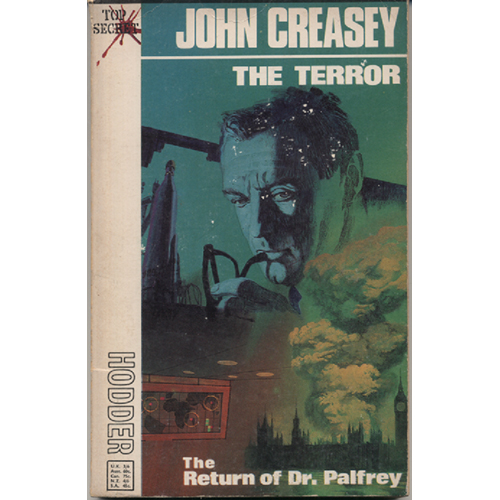
John Creasey’s The Terror, published in 1966 by Hodder Paperbacks, presents itself as an intriguing artefact of mid-20th century literature. The cover design is a vivid reflection of its time, featuring bold typography typical of the era, with striking illustrations that evoke a sense of suspense and danger. The paperback format, common in the 1960s, makes it a tactile experience, holding the weight of both its physical presence and the cultural significance of a period that embraced the accessibility of literature. Its slightly worn edges and dog-eared pages speak to its life as a reader's companion, a mark of a book that has been passed around, perhaps discussed over cups of tea or late-night conversations about its thrilling content.
John Creasey, while not as universally recognised as some of his contemporaries, was a prolific British author known for his extensive output across various genres, particularly crime and mystery fiction. He penned over 600 novels during his career, showcasing a remarkable versatility that allowed him to create numerous series and characters. His works often reflect the societal concerns of the time, addressing themes such as law, order, and the nuances of human morality. However, despite his productivity, Creasey’s legacy does not shine as brightly as that of other literary giants, perhaps due in part to the sheer volume of his work leading to a dilution of his individual titles in the public consciousness. This obscurity could suggest that his contributions remain underappreciated in the larger narrative of British crime fiction.
The year 1966 was a pivotal moment in British culture, marked by significant social and political upheaval. The swinging sixties were in full effect, characterised by a burgeoning youth culture, an explosion of creativity in music and art, and a shift in societal norms. This was the era when cultural icons like The Beatles and The Rolling Stones were redefining music, while television began to play a central role in everyday life. In the realm of literature, readers were increasingly drawn to works that explored darker themes, reflecting the anxiety and excitement of a world in flux. The Terror fits snugly into this milieu, offering a narrative that likely taps into the fears and uncertainties of the time, perhaps mirroring the tensions present in both domestic and global contexts.
As a cultural object, The Terror serves as a fascinating lens through which to view the period's literary trends. The paperback’s physical form, with its lightweight pages and flexible binding, embodies the shift towards mass-market publications that made literature more accessible to the general public. This democratization of reading material is significant, as it allowed a wider audience to engage with complex narratives and diverse voices. The book's design reflects the graphic sensibilities of the era, with bold colours and dynamic layouts that appeal to the eye, inviting readers to pick it up and delve into its mysteries.
Thematically, Creasey’s work often grapples with the nature of fear and the human psyche, an aspect that resonates well with the cultural climate of the 1960s. Readers of the time were increasingly drawn to thrillers and crime fiction that not only entertained but also provoked thought about morality and justice. Creasey’s ability to intertwine suspense with social commentary may have provided a satisfying escape, yet simultaneously invited readers to reflect on their own lives and the world around them. The book’s narrative likely unfolds against a backdrop of shifting moral landscapes, mirroring the societal changes that were taking place at the time.
In examining the book’s impact and reception, one might consider how it has fared in the literary canon. Although Creasey was a popular figure during his lifetime, the longevity of his works often depends on the revival of interest in vintage crime fiction. In recent years, there has been a resurgence of interest in classic thrillers, and as readers seek out the roots of the genre, The Terror could very well find its place among the rediscovered treasures of British crime literature. However, the obscurity surrounding Creasey’s work means that many modern readers may approach it with a mix of curiosity and caution, unsure of what to expect from a book that has not been widely discussed in contemporary literary circles.
In summary, The Terror stands as a testament to John Creasey’s prolific output and the cultural context of the 1960s. The book is not merely a story of suspense; it encapsulates a moment in time when literature was shifting towards accessibility and mass consumption, reflecting the complexities of a changing society. Its physical form and design speak to the era's aesthetic, while its themes resonate with the anxieties of the time. For those interested in the evolution of crime fiction and the nuances of mid-century literature, this book, as a product of Crappy Old Books, offers a fascinating glimpse into the past, even if it does not hold the same weight in the literary canon as some of its peers.