AI-assisted note, based on the text and a physical inspection of this copy.
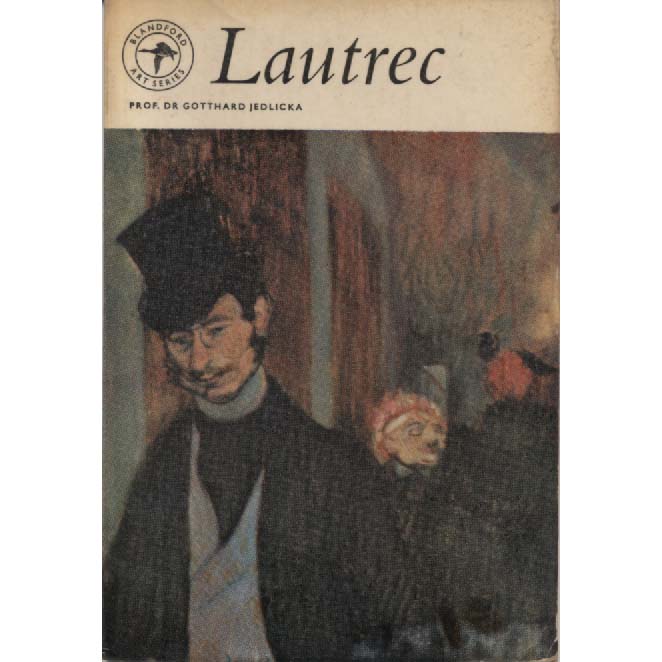
"Lautrec," authored by Gotthard Jedlicka and published in 1961 by Blandford Press, presents a curious window into the life and works of Henri de Toulouse-Lautrec, one of the most iconic figures in the world of art. The book is an exploration of the artist's tumultuous existence and vibrant oeuvre, although it may not fully capture the essence of Lautrec's genius. The cover design, typical of the era, features a striking, albeit somewhat muted, representation of Lautrec’s bold artistic style, juxtaposed with a palette that feels both nostalgic and dated. The overall aesthetic of the paperback gives off a distinctly mid-20th-century vibe, reminiscent of other art-focused publications of the time, yet lacks the dynamic flair one might hope for when delving into the life of such a flamboyant artist.
Jedlicka’s writing style is straightforward, yet it sometimes falters in its ability to evoke the passion and energy that surrounded Lautrec's life and work. The text offers a basic overview of Lautrec’s artistic journey, touching on his struggles with physical limitations and his deep connections to the bohemian culture of late 19th-century Paris. While the book serves as a decent introduction for those unfamiliar with Lautrec, it often feels like it skims the surface rather than digging deep into the complexities of his character and artistry. The inclusion of reproductions of Lautrec’s works is a definite plus, though they are not always of the highest quality, which detracts from the overall reading experience.
Gotthard Jedlicka appears to be a somewhat obscure figure in the realm of art literature. There is limited documentation available regarding his broader contributions to publishing or literary culture, which raises questions about his authority on the subject of Lautrec. This lack of widespread recognition could indicate that he was a niche author, possibly writing primarily for a specific audience rather than aiming for commercial success. Without further context on Jedlicka’s background or other works, it is challenging to gauge his impact or relevance within the larger discourse surrounding art literature.
The year 1961 was a transformative period in the world, marked by significant cultural shifts. In the realm of art, this was a time when modernism was in full swing, and post-war sentiments were beginning to manifest in various forms of expression. The counterculture movement was gaining momentum, and interest in the avant-garde was rising. "Lautrec" reflects this moment by attempting to bridge the gap between the historical significance of Toulouse-Lautrec's life and the contemporary art scene of the early 1960s. However, the book does not fully engage with the revolutionary ideas of its time, which may limit its appeal to modern readers searching for a deeper understanding of Lautrec's lasting influence.
As a cultural object, "Lautrec" holds a certain charm, particularly for those with an appreciation for vintage paperbacks and the art scene of its publication era. Its presence on a bookshelf may invite curiosity, yet it might not retain the same allure once its contents are explored. The book's balance of visual and textual elements offers an entry point into Lautrec’s world, yet it ultimately leaves the reader wanting more depth and insight. It serves as a reminder of the complexities of artistic biography and the challenge of encapsulating a life so richly lived in mere pages.
In summary, Gotthard Jedlicka’s "Lautrec" is an intriguing artefact from 1961 that attempts to illuminate the life of a brilliant artist through a mid-century lens. Despite its shortcomings in depth and engagement, it remains a notable piece within the broader context of art literature. For those exploring the intersections of art and history, or simply seeking a glimpse into the life of Toulouse-Lautrec, this book may serve as a stepping stone, albeit one that could benefit from a more robust treatment of its subject. Crappy Old Books presents such works, inviting readers to reflect on the cultural contexts that shape our understanding of artistic legacies.