AI-assisted note, based on the text and a physical inspection of this copy.
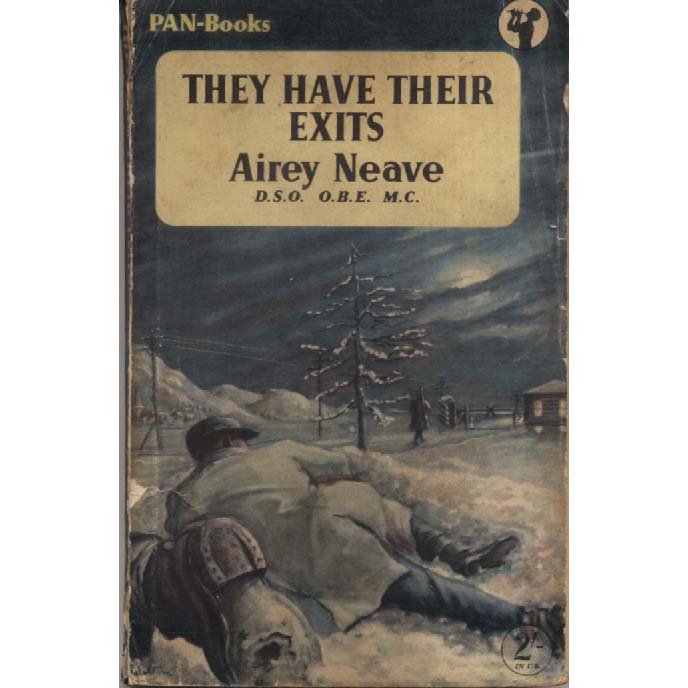
“They Have Their Exits” by Airey Neave, published in 1955 by Pan Books, presents itself as an intriguing artefact of mid-20th century British literature, yet it falls into the category of enjoyable mediocrity that Crappy Old Books often celebrates. The cover design, with its striking colour palette typical of the era, features bold typography that hints at the suspenseful content within. However, the overall aesthetic is somewhat unremarkable, lacking the flair that captures the eye in a bookstore or library. The paperback vibe is quintessentially mid-century, with its slightly worn edges and the scent of aged paper, evoking a nostalgia that many readers might appreciate despite the book’s lack of literary ambition.
Airey Neave, the author, is a figure of some historical significance, particularly within the context of British politics. He was a soldier, a member of Parliament, and a prominent figure in the Conservative Party. His life, however, was cut short by assassination in 1979, making him a somewhat obscure yet notable character in the annals of British history. Despite his political background, Neave's literary contributions are less documented, suggesting that while he may have had a significant impact on political discourse, his foray into fiction did not secure him a lasting place in literary culture. The absence of extensive records on his literary career invites speculation about the motivations behind his writing and the audience he sought to engage.
The year 1955 was a pivotal time in post-war Britain, marked by a society grappling with the aftermath of World War II. The cultural landscape was evolving, with a burgeoning sense of modernity and a desire for expressions of both relief and escapism. Neave's narrative likely reflects some of these societal tensions, as the British public began to explore themes of loyalty, national identity, and the complexities of the human experience in a changing world. However, Neave's attempt at capturing these sentiments appears to have missed the mark, as the prose often feels stilted and devoid of the emotional depth that might have resonated with contemporaneous readers.
The book's plot, while ostensibly thrilling, meanders through a series of predictable events that fail to create genuine suspense or intrigue. Characters are introduced with little depth, making it difficult for readers to form connections or invest emotionally in their journeys. This lack of character development undermines the tension that Neave seems to strive for, resulting in a reading experience that often feels flat. The dialogue, too, seems wooden and contrived, detracting from the authenticity of the interactions and the overall narrative flow.
One aspect of “They Have Their Exits” that merits discussion is its thematic exploration of escape and evasion. This is particularly relevant in the context of the Cold War, which was beginning to shape international relations and domestic concerns during the 1950s. Neave’s exploration of these themes, while ambitious, often feels ham-fisted, lacking the nuance that would elevate the narrative. The book ultimately serves more as a reflection of its time than as a timeless piece of literature, capturing a moment in history rather than a universal truth.
Furthermore, the pacing of the book is uneven, with sections that drag on and others that rush through critical plot points. This inconsistency makes it challenging for readers to fully engage with the story. The writing style, while competent, lacks the flair and innovation that characterises the works of more prominent authors of the period. This is particularly disappointing given the wealth of literary talent emerging in Britain at the time, with figures like Graham Greene and Ian Fleming setting high standards for suspense and intrigue.
Despite its many shortcomings, “They Have Their Exits” has its merits as a cultural object. It offers a glimpse into the mindset of a post-war society, grappling with issues of identity and the spectre of conflict. For readers interested in the historical context of British literature, it provides a valuable, if flawed, insight into the genre's evolution during the 1950s. The book may not stand the test of time in terms of literary merit, but it can serve as a curiosity for those seeking to understand the cultural milieu of its era.
In conclusion, “They Have Their Exits” by Airey Neave is a product of its time, encapsulating the spirit of 1955 with its themes of escape and societal tensions. While it may not be a literary gem, it still holds value for those interested in the nuances of mid-20th century British culture. As with many entries reviewed by Crappy Old Books, it stands as a testament to the diverse array of voices and narratives that populate the literary landscape, even if they do not all shine brightly.